
Fireplaces:Installation Precautions and Methods for Smoke Pipes of Fireplaces
Introduction
When it comes to enjoying the warmth and ambiance of a fireplace in your home, proper installation of the smoke – pipe is crucial. A well – installed smoke pipe ensures efficient operation of the fireplace, reduces the risk of fire hazards, and prevents harmful smoke from entering the living space. As a Chinese exporter specializing in selling fireplaces through independent cross – border e – commerce, we understand the importance of providing our customers with comprehensive guidance on smoke – pipe installation.Smoke Pipes of Fireplaces
Understanding the Basics of Smoke Pipes
Smoke pipes are an essential component of a fireplace system, responsible for safely expelling combustion gases and smoke out of the house. They come in various materials, such as stainless steel, galvanized steel, and ceramic, each with its own advantages and suitability for different fireplace types and environmental conditions.Smoke Pipes of Fireplaces
Installation Precautions
Structural Considerations
- Wall Penetration: When the smoke pipe needs to penetrate a wall, ensure that the wall has sufficient structural integrity to support the pipe. For brick or concrete walls, proper reinforcement around the penetration area may be required. If it’s a wooden frame wall, make sure the pipes don’t compromise the wall’s strength.
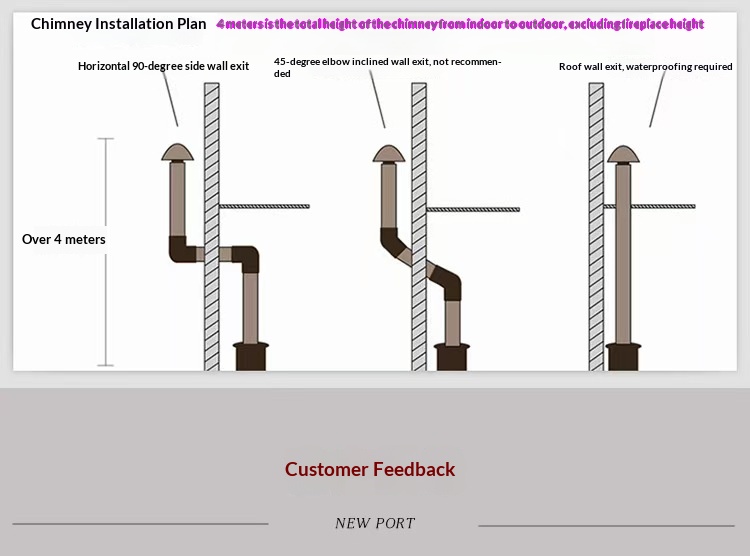
- Height Requirements: As shown in the provided chimney installation plan, the height of the smoke pipe is a critical factor. Generally, the total height of the chimney (from indoor to outdoor, excluding fireplace height) should be at least 4 meters. This height helps create a proper draft, ensuring that the smoke is effectively drawn out. However, local building codes and regulations may have specific height requirements, so it’s essential to check and comply with them.Smoke Pipes of Fireplaces
Pipe Connection and Sealing
- Pipe Fittings: Use appropriate pipe fittings for connecting different sections of the smoke pipe. For example, 90 – degree side – wall exits should be installed horizontally as recommended in the diagram. Avoid using ill – fitting or damaged fittings, as they can lead to leaks and reduced draft.
- Sealing: Ensure a tight seal between all pipe sections and fittings. Poor sealing can allow smoke to leak into the surrounding area, which is not only a nuisance but also a safety hazard. Use high – quality sealants specifically designed for smoke pipes to achieve a reliable seal.
Roof Penetration
- Waterproofing: When the smoke pipe penetrates the roof, waterproofing is of utmost importance. Install a waterproof flashing around the base of the pipe where it meets the roof. This will prevent water from seeping into the roof structure, which can cause damage over time. The roofing material should be carefully cut and sealed around the flashing to ensure a watertight seal.
- Angle of Inclined Wall Exits: Although 45 – degree elbow inclined wall exits are not recommended in general, if they are used for some special reasons, make sure the angle is accurately set. Incorrect angles can disrupt the draft and may cause smoke to back – up into the fireplace.Smoke Pipes of Fireplaces
Local Building Codes and Regulations
- Compliance: Before starting the installation, familiarize yourself with local building codes and regulations regarding smoke – pipe installation. These codes may cover aspects such as pipe materials, clearances from combustible materials, and ventilation requirements. Non – compliance can result in fines and potential safety risks.
- Permits: In some cases, you may need to obtain a building permit before installing the smoke pipe. Check with your local building department to determine if a permit is required and follow the necessary procedures.
Installation Methods
Planning the Route
- Indoor Layout: First, plan the indoor route of the smoke pipe. It should be as straight as possible to ensure good draft. Avoid sharp bends and long horizontal runs, as these can impede the flow of smoke. Measure the distance from the fireplace to the intended wall or roof penetration point to determine the length of pipe needed.
- Outdoor Placement: Consider the outdoor placement of the chimney cap. It should be placed at a height that is out of reach of people and animals, and also away from any nearby structures or obstructions.Smoke Pipes of Fireplaces
Pipe Installation Steps
- Starting from the Fireplace: Begin the installation at the fireplace. Connect the first section of the smoke pipe to the fireplace flue outlet. Make sure the connection is secure and sealed properly.
- Adding Sections: As you move towards the wall or roof penetration, add additional sections of the pipe as needed. Use appropriate fittings to connect the sections, and tighten them securely.
- Finalizing the Outdoor End: Once the pipe reaches the outdoor penetration point, install the chimney cap. The chimney cap serves to prevent rain, debris, and animals from entering the pipe. Make sure it is firmly attached and aligned correctly.Smoke Pipes of Fireplaces
Final Checks
- Draft Testing: After the installation is complete, perform a draft test. You can do this by lighting a small piece of paper near the fireplace opening and observing if the smoke is drawn up the pipe. If the smoke doesn’t rise properly, there may be an issue with the installation, such as a blockage, improper sealing, or a problem with the chimney height.
- Inspection: Conduct a visual inspection of the entire smoke – pipe system to ensure there are no leaks, loose connections, or other visible problems. Check the waterproofing around roof penetrations and the overall structural integrity of the installation.
In conclusion, proper installation of smoke pipes for fireplaces is a complex but essential task. By following these precautions and installation methods, you can ensure the safe and efficient operation of your fireplace, providing you with years of enjoyment and warmth in your home. If you have any questions or need further assistance during the installation process, don’t hesitate to contact our professional customer service team.Smoke Pipes of Fireplaces